Reviewing Best USA Baseball Bats of 2026
Written by Zach Kerr
Published October 3rd, 2024 · Updated March 5th, 2026


Buying a bat for a youth player is tricky. They're growing. Their swing is developing. And you're being asked to spend $50 to $400 on something they might outgrow in a year.
Every bat manufacturer promises "maximum pop" and "huge sweet spots." But a bat that's perfect for a 12-year-old who's been playing travel ball for three years is completely wrong for an 8-year-old just moving up from coach pitch.
We've tested USA-certified bats across age groups and skill levels to find what works. Below you'll find our top picks for 2026, plus a complete guide to help you figure out what your player actually needs.
Best USA Bats of 2026
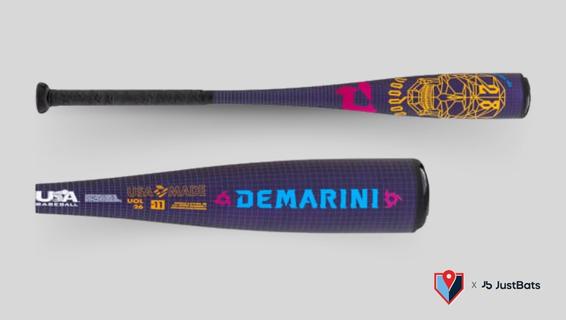
The DeMarini Voodoo ONE USA Baseball Bat is a one-piece, all-alloy design built for hitters who want that traditional stiff feel with immediate, responsive feedback on contact. The Voodoo X14 alloy barrel is hot right out of the wrapper without any break-in period, delivering consistent performance and a solid sweet spot that's ready for game action from day one. The Tracer end cap uses lightweight composite materials to optimize bat speed while preserving the barrel's powerful performance, and the balanced swing feel keeps it controllable through the zone. Being a one-piece alloy, you're going to feel more vibration on mishits compared to two-piece or composite designs, but you get that direct energy transfer and durability that alloy bats are known for. DeMarini backs it with a 12-month manufacturer's warranty, and since it's all-alloy construction, you can use it in any weather without worrying about the cracking issues that come with composite bats.
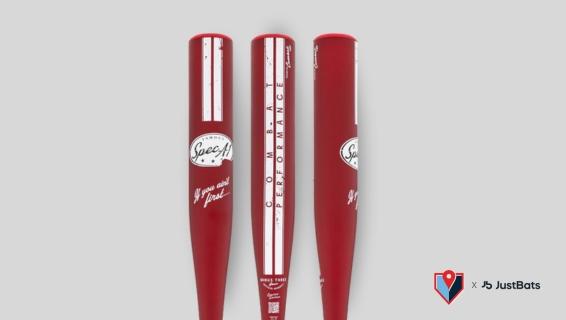
The Louisville Slugger Meta -10 USA Baseball Bat is built around an EKO Composite Barrel engineered for top-tier performance with a light-swinging feel, massive barrel profile, and an optimized sweet spot that delivers consistent, powerful contact once broken in. What makes the Meta unique is its three-piece construction with the VCX3 Vibration Control Connection System, which dramatically reduces hand sting better than most two-piece designs while still providing satisfying feedback on well-struck balls. The GT1 end cap improves barrel control and overall feel, allowing hitters to whip the bat through the zone with precision, while the Premium LS Pro Comfort Grip combines tack and cushion for a secure hold. With its balanced swing weight, the Meta makes it easy to generate quick bat speed without sacrificing power, working well for contact hitters and gap-to-gap players alike. Louisville Slugger backs it with a 12-month manufacturer's warranty.
Pros
- Strong pop
- Large sweet spot
- Balanced swing feel
Cons
- Durability concerns
- Hand sting on mishits
- Requires break-in
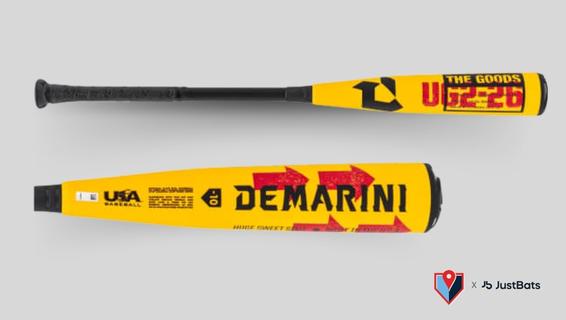
The Goods -10 USA Baseball Bat is built around DeMarini's massive X14 alloy barrel paired with a composite handle in a two-piece hybrid design that delivers explosive power right out of the wrapper without any break-in period. That X14 barrel is legitimately hot and provides a large sweet spot with serious pop, while the composite handle does a nice job absorbing vibration to keep your hands comfortable on mishits. The Direct Connection technology creates a stiff feel that optimizes energy transfer for consistent, hard contact, and the Tracer end cap enhances bat speed while maintaining the barrel's performance. With its balanced swing feel and drop 10 length-to-weight ratio, it's a versatile choice for players who want to generate quick bat speed while still driving the ball with authority. DeMarini backs it with a 12-month manufacturer's warranty, and since it's alloy, you get immediate performance from day one without waiting for a break-in period.
Best Overall
Easton Hype Fire ($350)
Top-ranked USA composite with huge sweet spot, excellent vibration dampening, balanced feel works for most players
Best for Power Hitters
DeMarini The Goods ($250)
End-loaded hybrid with massive X14 alloy barrel, stiff feel for stronger players who want to drive the ball
Best for Contact Hitters
Louisville Slugger Meta ($350)
Two-piece composite with VCX3 vibration control, huge forgiving barrel, balanced swing
Best Budget Option
Soldier Tank ($200)
One-piece alloy with big barrel, good pop at entry-level price, official bat of Perfect Game
Best Premium Bat
Rawlings Icon ($350)
Two-piece composite with massive sweet spot, balanced-to-slight-end-load feel, proven performance
What Makes a USA Bat "Best"
There's no single best bat for every youth player. A 7-year-old in his first year of kid pitch needs something completely different than a 13-year-old preparing for high school tryouts.
USA Baseball certification means all these bats perform within the same regulated standards. The differences come down to materials, construction, weight distribution, and how those factors match your kid's size, strength, and swing.
The right bat is the one your player can swing with control and confidence. A $400 composite that's too heavy does more harm than a $150 alloy that fits.
How to Choose the Right USA Baseball Bat
USA-certified bats are required for most youth leagues, including Little League (Majors and below), Cal Ripken, Dixie Youth, Babe Ruth (12U and younger), PONY, and AABC. If your player is between 4 and 13, there's a good chance they need a USA bat.
But within that certification, there's a huge range of options. Drop weights from -5 to -13. Materials from aluminum to full composite. Prices from $50 to $400. Here's how to figure out what actually makes sense for your kid.
The Real Decision Framework
When choosing a USA bat, you're making four decisions:
- Drop weight: How heavy should the bat be relative to its length?
- Material: Alloy, composite, hybrid, or wood?
- Construction: One-piece, two-piece, or three-piece?
- Length: What size fits your player right now?
Get drop weight and length right first. Those matter most. Then choose materials and construction based on budget and preference.
Understanding Drop Weight
Drop weight is the difference between a bat's length (in inches) and its weight (in ounces). A 30-inch bat that weighs 20 ounces is a drop 10 (-10).
This is the most important spec for youth bats. Get it wrong and your player will struggle, no matter how expensive or highly-rated the bat is.
Drop Weight Options
-13 to -12: Lightest bats. Best for younger players (ages 5-7), beginners, or smaller kids who need maximum bat speed. These are typically entry-level bats for players just learning to swing.
-11 to -10: The most common drop weights for youth players ages 8-12. Light enough to swing with control, heavy enough to drive the ball. Most USA bats come in these drops.
-8: Heavier bat for stronger, more experienced youth players. Often used by 11-13 year olds preparing for the transition to heavier bats. Requires more strength to swing effectively.
-5: The heaviest USA drop weight. For elite youth players, typically 12-13 year olds, who are ready for a bat closer to BBCOR weight. Only choose this if your player has genuinely outgrown -8 and can still swing with bat speed.
Full guide to buying youth baseball bats.
How to Pick the Right Drop Weight
The simple test: Have your player hold the bat straight out to their side, arm parallel to the ground. If they can hold it steady for 30-45 seconds without the barrel dropping, the weight is manageable. If the barrel drops immediately, the bat is too heavy.
The better test: Watch them swing. If they're getting the barrel through the zone quickly and making solid contact, the weight is right. If they're slow to the ball, dragging the barrel, or consistently late on pitches, go lighter.
When in doubt, go lighter. A bat that's too light lets your player develop proper mechanics. A bat that's too heavy teaches bad habits: casting, dropping hands, slow bat speed. You can always move up in weight. Undoing mechanical issues is harder.
The Drop Weight Progression
Most players follow a general progression as they grow:
| Age | Typical Drop | Notes |
|-----|--------------|-------|
| 5-7 | -13 to -11 | Focus on making contact, learning to swing |
| 8-9 | -11 to -10 | Building strength, developing mechanics |
| 10-11 | -10 to -8 | More power potential, still prioritize bat speed |
| 12-13 | -8 to -5 | Preparing for transition to BBCOR |
These are guidelines, not rules. A small 10-year-old might stay at -11. A big, strong 9-year-old might handle -10 easily. Watch your player, not the chart.
Bat Materials
Alloy (Aluminum) Bats
What they are: Single-piece metal construction, typically aluminum alloys.
The good:
- Ready to hit immediately, no break-in period
- More durable, especially in cold weather and cage use
- Less expensive ($50-200 range for most)
- Consistent performance over the bat's life
- Better for younger players still learning
The tradeoffs:
- Smaller sweet spot
- More vibration on mishits (stings the hands)
- Less "pop" compared to broken-in composite
Best for: Beginners, younger players, budget-conscious families, cold weather climates, and players who use the bat heavily in practice.
Composite Bats
What they are: Layered carbon fiber materials woven together and bonded with resin.
The good:
- Larger sweet spot once broken in
- Better vibration dampening (less sting)
- Lighter swing weight possible at same length
- More "pop" after break-in period
The tradeoffs:
- Requires 150-200 swings to break in before peak performance
- More expensive ($200-400 range)
- Can crack in cold weather (below 60°F)
- Less durable with heavy use
- Not ideal for cage work with hard rubber balls
Best for: Experienced players, families willing to invest in performance, warm weather climates, and players who have a second bat for practice.
Hybrid Bats
What they are: Typically an alloy barrel with a composite handle, combining elements of both.
The good:
- Durability of alloy barrel
- Vibration dampening from composite handle
- Often game-ready with minimal break-in
- Good middle-ground option
The tradeoffs:
- More expensive than pure alloy
- Performance depends heavily on specific model
- Composite handle still vulnerable to cold
Best for: Players who want reduced vibration but need alloy durability, and families looking for a balance of performance and practicality.
Wood Bats
What they are: Solid wood construction, usually maple, ash, or birch.
The good:
- Teaches proper swing mechanics (small sweet spot demands good contact)
- No break-in period
- Legal in all leagues
- Great for practice and training
The tradeoffs:
- Smallest sweet spot
- Can break on mishits
- Less performance than metal or composite
- Heavier feel at same drop weight
Best for: Training, batting practice, and players who want to develop better contact skills. Not typically used as a primary game bat at youth level.
The Cold Weather Factor
If you play in a region with early spring seasons (Northeast, Midwest, anywhere with games below 60°F), think carefully about composite bats. Composite barrels can crack in cold temperatures, and most warranties don't cover cold-weather damage.
Options for cold weather families:
- Use an alloy bat for cold games, composite for warm weather
- Go with a hybrid (alloy barrel handles cold better)
- Stick with alloy if you can't afford two bats
Bat Construction
One-Piece Bats
The entire bat is a single continuous piece of material.
How it feels: Stiff and direct. Energy transfers straight from hands to barrel. You feel everything, including mishits.
Who it's good for: Stronger players who make consistent contact. The stiff feel rewards good swings with maximum energy transfer.
Who should avoid it: Younger players, beginners, anyone who mishits frequently. The vibration on bad contact can sting and discourage developing hitters.
Two-Piece Bats
The barrel and handle are separate pieces connected by a joint.
How it feels: More flex and whip. The connection point absorbs vibration, reducing sting on mishits.
Who it's good for: Most youth players. The forgiveness helps developing hitters, and reduced vibration keeps practice comfortable. Contact hitters especially benefit from the feel.
Who should avoid it: Players who specifically want maximum stiffness and feedback. Some power-focused hitters prefer one-piece feel.
Three-Piece Bats
Three separate components (barrel, connection piece, handle) joined together.
How it feels: Maximum vibration dampening. The additional connection point isolates the handle from barrel vibration even more than two-piece.
Who it's good for: Players who are sensitive to vibration, or those making lots of contact in practice and games.
The tradeoff: Higher price point. Three-piece construction is typically only found on premium bats.
The Honest Recommendation
For most youth players, two-piece construction is the smart choice. The forgiveness helps while they're developing, the reduced vibration keeps their hands comfortable, and the performance is excellent. One-piece makes sense for experienced players who consistently barrel the ball and want that stiffer feel.
Getting the Right Length
Sizing Guidelines
USA bats typically range from 24 to 32 inches. Here's a general guide:
| Player Height | Player Weight | Suggested Length |
|---------------|---------------|------------------|
| Under 3'6" | Under 40 lbs | 24-25" |
| 3'6" - 3'10" | 40-50 lbs | 25-26" |
| 3'10" - 4'2" | 50-60 lbs | 26-27" |
| 4'2" - 4'6" | 60-70 lbs | 27-28" |
| 4'6" - 4'10" | 70-80 lbs | 28-29" |
| 4'10" - 5'2" | 80-100 lbs | 29-30" |
| 5'2" - 5'6" | 100-120 lbs | 30-31" |
| Over 5'6" | Over 120 lbs | 31-32" |
These are starting points, not rules. Swing style matters too. Some players prefer shorter bats for quicker hands. Others like longer bats for plate coverage.
The Real Test
Knob to chest: Stand the bat up next to your player. The knob should reach somewhere between their hip and belt. If it reaches their chest, it's too long.
Arm extension: Have your player hold the bat handle and extend their arm to the side. They should be able to reach the middle of the barrel with their fingertips. If they can barely touch the end cap, it's too long.
The swing test: Watch them swing. Can they get the barrel to an inside pitch? Can they control the bat through the zone without casting? If the bat looks unwieldy, go shorter.
When Kids Grow
Youth players grow fast. A bat that fits in April might feel short by August. Some families buy slightly longer to get more use, but don't overdo it. A bat that's an inch too long hurts development more than buying a new bat next season.
If budget is tight, consider:
- Buying used or last year's model
- Checking for end-of-season sales
- Looking at alloy bats that cost less to replace
Budget Reality
$50-100: Entry Level
What you get: Basic alloy bats, one-piece construction, smaller sweet spots. Functional and durable.
Who should buy here: Beginners, younger players (5-8), recreational players, families not sure if their kid will stick with baseball.
The reality: These bats work fine for learning. Your 6-year-old doesn't need a $300 composite. Save the money until they're older and you know they're committed.
$100-200: Mid-Range
What you get: Quality alloy or entry-level composite, better sweet spots, improved vibration dampening, two-piece options.
Who should buy here: Most youth travel players. This is the sweet spot for value. Meaningful performance improvements without overpaying for marginal gains.
The reality: A $150 bat from a reputable brand will perform well for most players. Don't let anyone convince you that your 9-year-old needs a $400 bat to compete.
$200-350: Premium
What you get: High-end composite barrels, maximum sweet spots, best vibration dampening, lightest swing weights.
Who should buy here: Serious travel players with developed swings, families who can afford to invest and protect the bat properly, players in warm climates who won't risk cold-weather damage.
The reality: Premium bats do perform better. But the gap between a $150 bat and a $350 bat is smaller than the gap between a bad swing and a good swing. If budget is limited, spend the difference on lessons.
$350+: Elite
What you get: Top-of-the-line everything. The latest technology, biggest sweet spots, best feel.
Who should buy here: Elite players at the top of their age group, families where cost isn't a concern, players who will actually use and protect a premium bat.
The reality: Diminishing returns are real. A $400 bat is not twice as good as a $200 bat. Most youth players won't notice the difference. Your kid's development matters more than their bat's price tag.
Common Mistakes to Avoid
Buying Too Heavy
The most common mistake. Parents think heavier bat = more power. In youth baseball, the opposite is usually true. Bat speed generates power. A lighter bat swung fast hits harder than a heavy bat swung slow.
Signs the bat is too heavy:
- Slow swing, late to pitches
- Dropping hands to get the bat started
- Casting (sweeping swing instead of direct path)
- Barrel dragging through the zone
- Getting jammed on inside pitches
If you see these, drop down in weight immediately. Mechanics matter more than mass.
Buying for Growth
"He'll grow into it" doesn't work for bats. A bat that's too long or too heavy teaches bad habits today. Those habits are harder to fix than buying another bat next year.
Buy what fits now. Accept that you might need a new bat in 12-18 months. That's youth baseball.
Skipping the Break-In
Composite bats need 150-200 swings off a tee or soft toss to reach peak performance. Hit the bat around its circumference, rotating slightly between swings. Don't use it in games until it's broken in.
Using an unbroken composite in a game means you paid for performance you're not getting. Take the time to do it right.
Using Composite in Cold Weather
Composite barrels can crack below 60°F. If you have a composite bat and play early-season games in cold weather, leave it home. Use an alloy backup or accept the risk of cracking.
Ignoring Feel
Your player's opinion matters. If a bat doesn't feel right in their hands, they won't swing it confidently. Let them try different options when possible. Their comfort translates to better performance.
Chasing What Travel Teammates Use
Just because the best kid on the team swings a certain bat doesn't mean it's right for your player. Different sizes, different strengths, different swings. Find what fits your kid.
USA Bat Certification Explained
In 2018, USA Baseball implemented new bat standards that reduced the "trampoline effect" of youth bats, making them perform more like wood bats. This was designed to improve player safety and development.
What it means for you:
- Look for the "USA Baseball" stamp on any bat you buy
- All major youth leagues (Little League, Cal Ripken, PONY, etc.) require this certification
- Old BPF 1.15 bats are no longer legal in most leagues
- USA bats have less pop than old youth bats or current USSSA bats
USSSA vs USA: These are different certifications. USSSA bats (often stamped "BPF 1.15") are legal in USSSA leagues but NOT legal in Little League or other USA Baseball leagues. Make sure you're buying the right certification for your league.
When to Replace the Bat
Signs It's Time
Visible damage: Cracks, dents, loose end caps, or rattling sounds mean the bat is done. Don't use a damaged bat.
Dead feel: If the bat used to have pop and now feels flat, the barrel may be worn out. Composite bats especially lose performance over time with heavy use.
It doesn't fit anymore: Your player grew. The bat is too short or too light. Time to size up.
League change: Moving from USA to USSSA (or vice versa) requires a different bat certification.
Getting More Life from Your Bat
- Rotate the bat slightly between swings to distribute wear
- Don't use composite bats in cold weather
- Use a batting cage bat for practice (cheaper alloy)
- Store bats at room temperature, not in the car trunk
- Check the end cap periodically for loosening
Final Thoughts
The right USA bat is the one your player can swing with confidence and control. Don't overthink it.
For most youth players, here's a solid approach:
- Drop weight: Start lighter than you think. Move up only when they've clearly outgrown it.
- Material: Alloy for beginners and budget-conscious families. Composite for experienced players who will protect it.
- Construction: Two-piece for most players. One-piece only if they consistently barrel the ball.
- Length: Follow the size charts as a starting point, then watch them swing.
- Budget: $100-200 covers most players well. Premium bats are nice but not necessary.
Our Top Picks from 2025
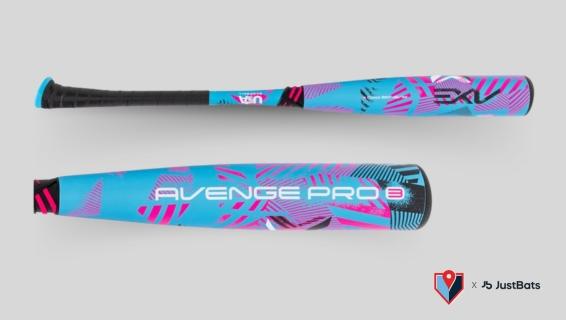
The Axe Avenge Pro -10 USA Baseball Bat is designed for balanced performance with its hybrid construction, combining an alloy barrel and composite handle. The CNC Precision Barrel Technology optimizes weight distribution, offering a durable yet lightweight barrel for faster swings.
Its Shock Suspension Technology minimizes vibrations, enhancing comfort and control. The HyperWhip Composite End-Cap increases swing speed and expands the sweet spot. Ideal for USA Baseball leagues, the bat offers both durability and performance, with a bold colorway that adds style to your game.
Pros
- Strong pop
- Large sweet spot
- Solid durability
Cons
- Durability concerns
- Feels heavy for some hitters
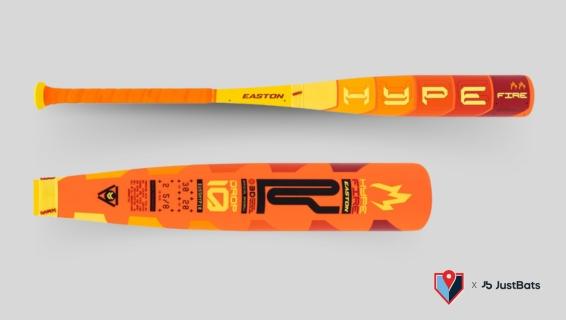
The 2025 Easton Hype Fire USA bat is built with 3D Ropecoil composite technology, wrapping a 360-degree rope around the sweet spot to maximize power. Its Opti-Flex handle, designed from top player feedback, adjusts flex per size for optimal swing feel.
The bat also features a Power Boost Soft Knob and Flow-Tack grip, improving leverage, comfort, and barrel control. Perfect for USA ball players, the Hype Fire USA offers faster swing speeds and superior performance. Get ready to experience the hype!
Pros
- Strong pop
Cons
- Hand sting on mishits
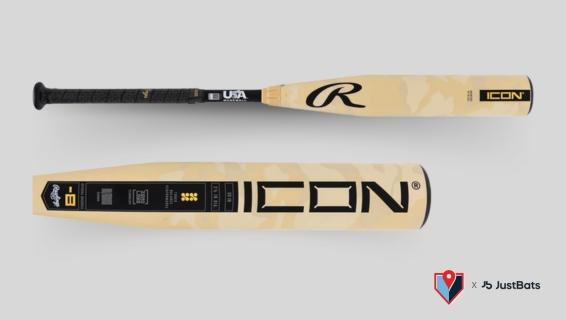
The Rawlings Icon -8 is a high-performance two-piece composite bat with a 2 5/8 inch barrel diameter, designed for maximum contact and power. Constructed with In/Tense Carbon Composite technology, it delivers a trampoline effect for greater hit distances.
Its Zero Loss Energy Technology eliminates drag and vibration, ensuring energy transfer to the ball. The bat features a balanced swing weight, adaptable for both power and contact hitters, and includes a comfortable RevGrip for secure handling.
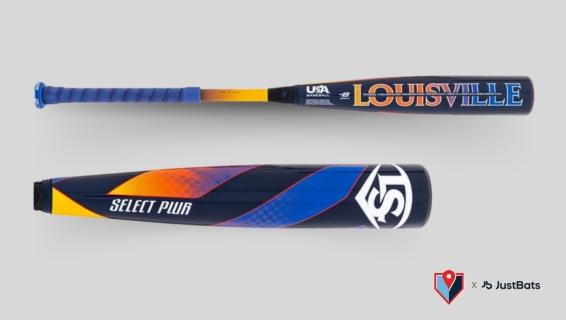
The Louisville Slugger Select PWR USA Baseball Bat offers a balanced swing with a 2 5/8 inch barrel for an expansive sweet spot, enhancing bat speed and control. Its three-piece hybrid design includes the durable EXD Alloy Barrel, providing extra reach and hitting power.
The VCX2 Vibration Control Connection System minimizes vibration for a smoother swing, while the SPD-Gen2 End Cap optimizes barrel performance. The LS Comfort Pro Grip ensures a secure, cushioned feel.
Pros
- Large sweet spot
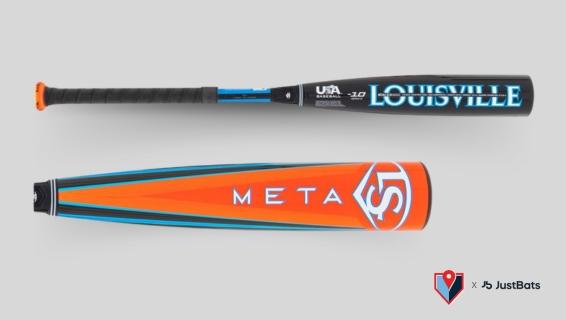
The Louisville Slugger Meta -10 is designed for youth players who prioritize both power and control. Its balanced swing weight and 2 5/8 inch barrel diameter create an ideal combination of speed and hitting power.
The EKO Composite material allows for a larger sweet spot, while the VCX2 Connection technology minimizes vibration for smoother contact. The GT1 End Cap promotes better barrel control, and the LS Pro Comfort Grip enhances comfort and grip at the plate. Built for top-tier performance, it's USA Baseball certified for youth leagues.
Pros
- Strong pop
- Large sweet spot
- Balanced swing feel
Cons
- Durability concerns
- Hand sting on mishits
- Requires break-in
Read next: Best BBCOR Bats
Join the club!
Sign up for our newsletter for more articles like this and features updates from our team!
Zach Kerr
Author
Zach is a former college pitcher & Founder of Baseball Near You.